
Digital Noticeboards for Colleges: Replacing Paper in Real Time
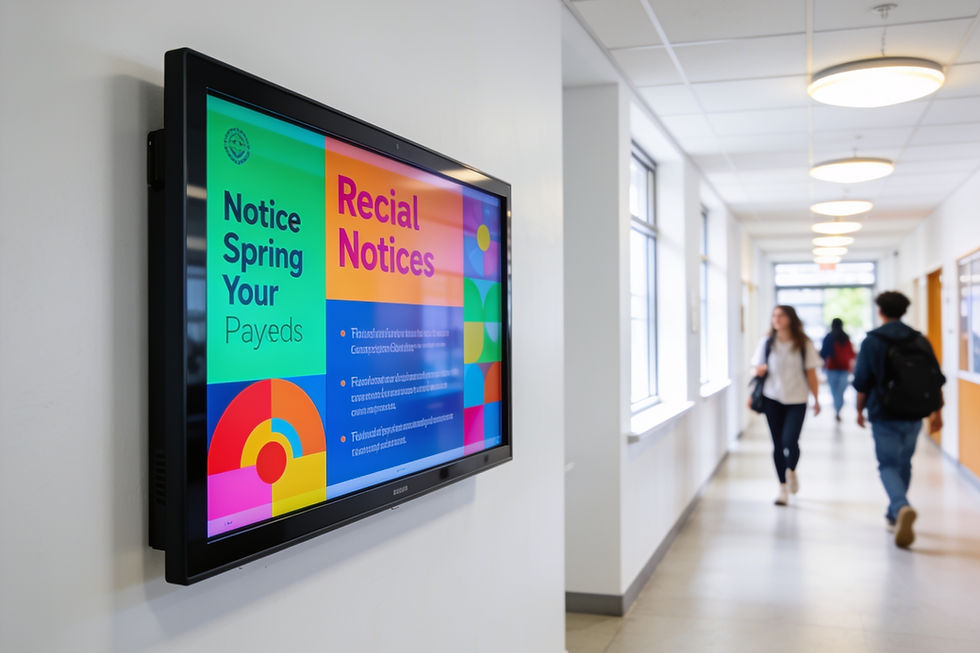
The paper noticeboard has been a fixture of college corridors for decades, and for just as long it's carried the same quiet flaws — outdated notices left up long after they're relevant, a first-come-first-served scramble for pin space, and no way to update anything without physically walking to the board. Digital noticeboards for colleges solve all three at once, replacing static paper with real-time, centrally manageable content.
The Real Problem With Paper Noticeboards
Paper noticeboards degrade in usefulness the moment they're put up — there's no way to know if a notice is still relevant without reading the date, no way to prioritise urgent information over routine announcements, and limited physical space forces difficult decisions about what actually gets displayed.
Outdated Information Left Up Too Long
An event notice left up weeks after the event has passed isn't just unhelpful — it actively damages trust in the noticeboard as a reliable information source, training students to ignore it altogether over time.
What Real-Time Actually Means for a College Noticeboard
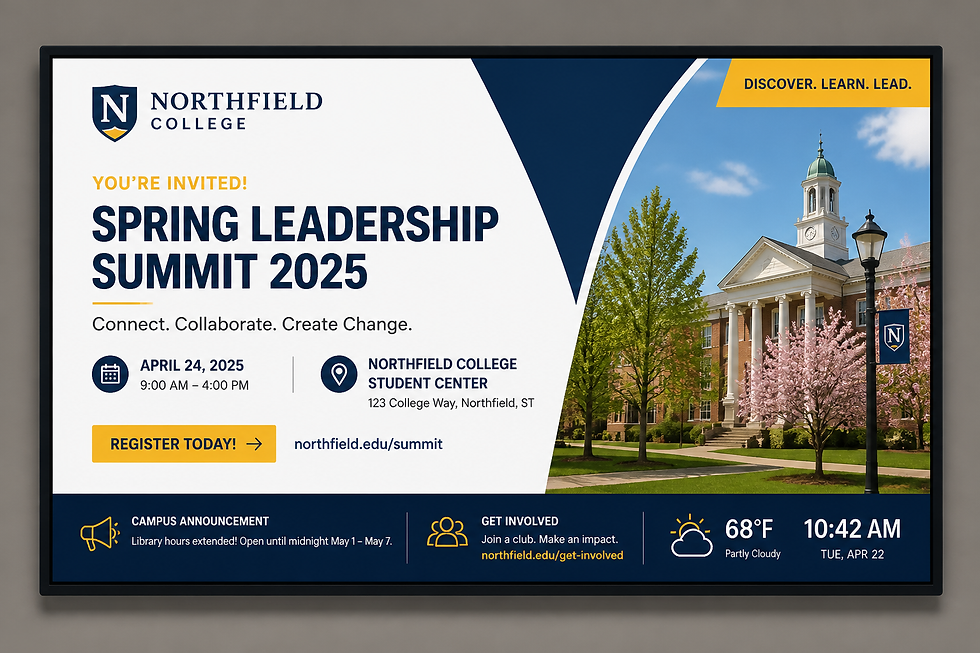
A digital noticeboard update takes effect the moment it's published through the CMS, rather than requiring someone to physically visit the board with a new printout and staple gun. This genuinely changes what's practical to communicate — same-day changes, urgent updates, and time-sensitive event reminders all become viable in a way they simply weren't with paper.
Automatic Expiry Removes the Outdated Content Problem
A CMS-scheduled notice can be set to automatically stop displaying once its relevant date has passed, solving the outdated-content problem that paper noticeboards structurally can't address without ongoing manual maintenance.
Solving the Pin Space Scarcity Problem
Physical noticeboard space is inherently limited, forcing a difficult and often political decision about which society, department or announcement gets the prime, visible spot. A digital rotation removes this constraint by giving every notice its own time slot in a rotating display, rather than competing for permanently limited physical space.

Fair Rotation Across Student Societies and Departments
A digital rotation system can be configured to give every registered student society or department a fair, guaranteed slot in the rotation, removing the informal politics that often surrounds limited physical pin space.
Who Manages Content on a College Digital Noticeboard
Most colleges assign day-to-day content management to a student services or communications team, with individual societies or departments able to submit content for scheduling rather than needing direct CMS access themselves — a simple, manageable governance model that scales well as the number of contributors grows.
Frequently Asked Questions
What's the main problem with traditional paper noticeboards?
Outdated information left up too long, no way to prioritise urgent content, and limited physical space forcing difficult decisions about what gets displayed are the core recurring problems paper noticeboards face.
Can digital noticeboard content expire automatically?
Yes — a CMS-scheduled notice can be set to automatically stop displaying once its relevant date has passed, solving the outdated-content problem structurally rather than relying on manual removal.
Does digital signage solve the limited pin space problem?
Yes — a digital rotation gives every notice its own time slot rather than competing for permanently limited physical board space, removing much of the scarcity and politics around visibility.
Who typically manages content on a college digital noticeboard?
Most colleges assign day-to-day management to a student services or communications team, with individual societies able to submit content for scheduling rather than needing direct CMS access.
How quickly can a digital noticeboard reflect a same-day change?
Updates take effect the moment they're published through the CMS, making same-day changes and urgent updates genuinely practical in a way paper noticeboards structurally aren't.
Can every student society get fair visibility on a digital noticeboard?
Yes — a rotation system can be configured to give every registered society or department a guaranteed, fair slot in the display rotation.
Does replacing paper noticeboards with digital signage save staff time?
Yes — removing the need to physically print, post and later remove paper notices across a campus reduces a recurring administrative task for whoever previously managed the physical boards.
Comments